
How To Choose Curtains For Open-Plan Living Rooms
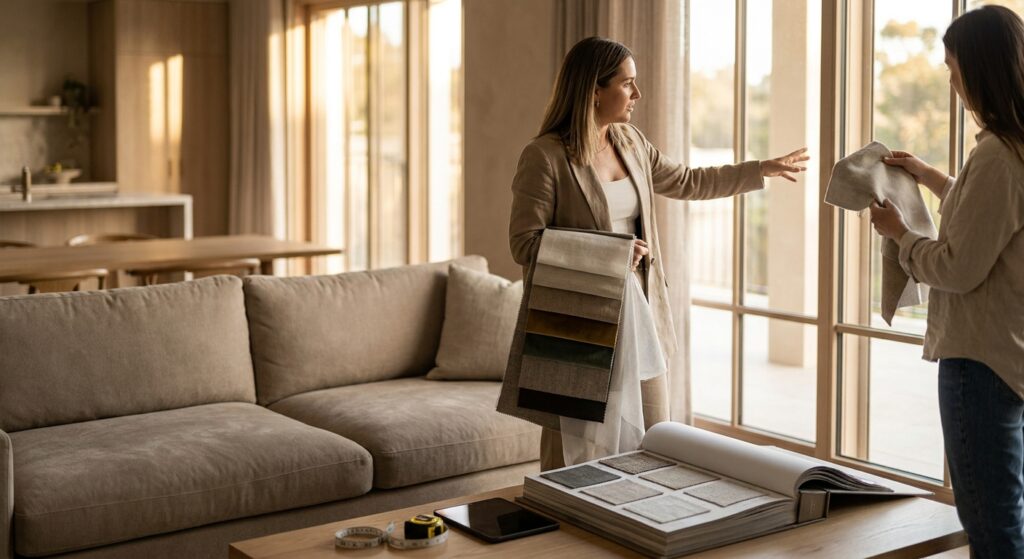
Choosing curtains for an open-plan room requires a technical approach. The primary challenge is unifying distinct functional zones, like a lounge and a dining area, without creating visual clutter or sacrificing practicality. Factors like fabric weight, heading type, and colour consistency directly impact light control, thermal insulation, and the perception of space across the entire area. The bottom line is that you must select a single, cohesive window treatment strategy that serves multiple needs simultaneously.
The Core Strategy: Unifying Function and Form
A successful open-plan curtain installation hinges on one principle: visual continuity. Using different curtain styles or clashing colours in the same continuous space fragments the room, making it feel smaller and disorganised. The goal is to create a consistent visual line that connects different zones.
Key considerations for achieving this include:
- Consistent Colour Palette: Select one or two complementary colours to use across all windows to maintain harmony.
- Uniform Fabric Choice: Use the same fabric throughout the entire space to create a seamless and cohesive look.
- Identical Heading Style: Employ the same heading, such as a wave or pinch pleat, to maintain a clean horizontal line.
This approach ensures that the window treatments act as a unifying backdrop rather than competing focal points.
Managing Light and Privacy Across Zones
Open-plan areas have varied lighting requirements. The section with your television needs glare reduction, while a dining area might benefit from softer, diffused light. You cannot treat every window identically from a functional standpoint.
The Double Track System
A double track system is an effective mechanical solution. It allows for two layers of curtains, offering maximum flexibility for light and privacy control throughout the day. This setup gives you independent control to meet the specific needs of each zone.
A typical and highly functional configuration includes:
- A sheer or voile curtain on the back track for daytime privacy and diffused light.
- A heavier, blockout or thermal-lined curtain on the front track for night-time privacy, insulation, and complete light control.
Fabric Mechanics and Environmental Factors
Fabric selection goes beyond aesthetics; it is about physical performance. The weight, weave, and composition of the material dictate its durability, insulating properties, and acoustic performance, which are significant in large, open rooms. South African conditions, from coastal humidity to highveld sun, demand robust materials with high UV resistance to prevent fading.
Important fabric properties to assess are:
- Thermal Performance: Heavier weaves and thermal linings reduce heat transfer, which is vital for managing energy costs in large spaces.
- UV Resistance: Fabrics with high UV resistance prevent fading and material degradation from strong sunlight exposure.
- Acoustic Absorption: Textured fabrics like velvets or heavy linens absorb sound, reducing the echo common in open-plan layouts.
These technical choices ensure your curtains function efficiently for years.
Customize Your Living Room Curtains at Blinds & Curtain Lane
Selecting the correct curtains for an open-plan space involves balancing multiple technical variables. Our specialists assess your room’s specific layout, lighting, and functional needs to recommend a precise, integrated solution. We ensure your installation is both visually cohesive and mechanically sound. Get an obligation-free quote by contacting us through our form.
FAQs
Should curtains in an open-plan area all be the same?
Yes, for visual cohesion, it is best to use the same fabric and colour for all curtains. You can, however, vary the lining or use a double track system to meet different functional needs for light and privacy in different zones.
What is the best curtain heading for a modern open-plan room?
Wave or S-fold headings create a simple, uniform look that works well in contemporary open-plan spaces. Eyelet curtains are also a popular choice for their clean lines and ease of operation over wide spans.
How do I make my open-plan space feel warmer with curtains?
Use thermally lined curtains. The lining adds an extra layer of insulation, trapping heat in during winter and blocking it out in summer. Choosing fabrics in warmer tones can also contribute to a cosier atmosphere.
Can I use blinds and curtains together in an open-plan room?
You can, but it requires careful planning to maintain a unified look. It is often best to use the same style of blind, like roller blinds in a consistent colour, behind a single style of sheer curtain across the entire space to layer functionality while preserving a cohesive aesthetic.