
Best Curtains to Keep Your House Warm: A Complete Guide to Thermal Insulation
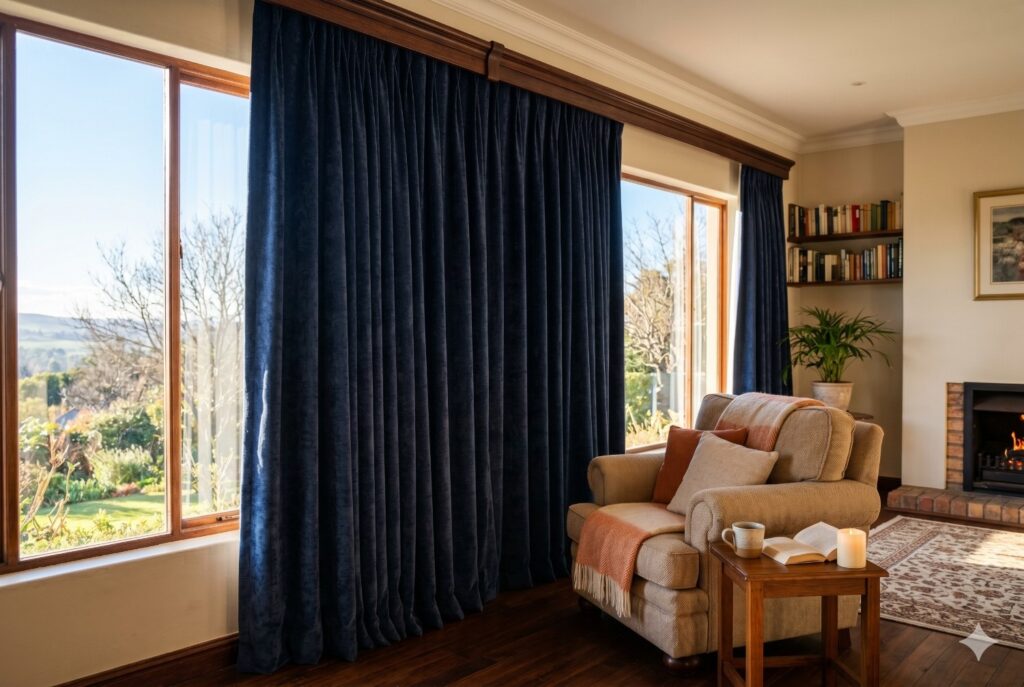
Your primary objective is to reduce winter heat loss, which accounts for a significant portion of residential energy expenditure. The most effective solutions involve multi-layered fabric systems designed to create an insulating air barrier.
We recommend heavyweight, lined drapes, insulated cellular shades, and purpose-built thermal curtains as the top-performing categories for tangible energy savings and improved interior comfort.
How Do Thermal Curtains Work to Retain Heat?
Thermal curtains function as engineered multi-layered systems that enhance a window’s thermal resistance by trapping a layer of still air between the fabric and the glass. This dead-air space acts as an effective insulator, slowing heat loss caused by conduction, convection, and radiation.
The overall efficiency of the system is measured by its R-value, which quantifies resistance to heat flow based on the combined performance of the fabric, lining, and trapped air. By achieving an R-value of up to R-6, a well-fitted thermal curtain system can reduce winter heat loss by up to 25%, significantly lowering heating costs.
Key Features to Look for in Insulated Window Treatments
Evaluate the following key features when choosing your options for winter insulation:
- Dense Face Fabrics: Look for heavy, tightly woven materials like velvet, wool, or thick polyester blends that naturally reduce airflow.
- Multi-Layered Thermal Linings: Ensure the curtain features a layered construction consisting of a decorative face fabric, an insulating core made of high-density foam or felt, and a backing that reflects radiant heat back into the room.
- Purpose-Built Thermal Design: Choose purpose-built thermal curtains over standard blackout curtains for winter heat retention.
Prioritizing these structural elements, you can select a high-performance window treatment that successfully minimizes heat loss and lowers your energy costs.
How to Use Your Curtains Strategically During Winter Months
Operating thermal curtains strategically during winter requires alignment with passive solar heating principles rather than treating them as static decorations. On sunny days, open curtains on north-facing windows to allow direct sunlight to warm interior surfaces and store thermal energy.
Just before sunset, close these curtains promptly to trap the collected heat inside and prevent it from escaping through the cold glass overnight. Conversely, windows on the south side that receive no direct sunlight should remain covered throughout the day to preserve the insulating barrier and prevent continuous heat loss.
Top-Rated Curtain Types for Preventing Heat Loss
Evaluate the following top-rated options that deliver measurable improvements in heat retention:
- Insulated Cellular Shades: Known also as honeycomb shades, these feature pleated fabric cells that trap air within their structure to create an exceptionally high thermal barrier.
- Heavyweight Floor-to-Ceiling Drapes: Utilizing dense materials like velvet or wool combined with an essential thermal lining creates a substantial barrier against heat loss.
- Magnetic Thermal Window Covers: These highly functional systems consist of clear film or quilted fabric panels that attach directly to the window frame with magnetic strips.
Investing in these highly engineered designs allows you to successfully minimize winter heat loss while lowering your overall household heating costs.
Installation to Maximize Energy Efficiency
Maximizing the energy efficiency of thermal curtains depends entirely on correct installation to create a sealed pocket of still air between the fabric and the glass. Gaps at the top, bottom, or sides trigger a convective air loop that pulls warm air out of the room, completely nullifying the insulating effect.
To eliminate these thermal leaks, install curtains high near the ceiling and wide past the window frame, allowing the fabric to touch or puddle on the floor. Additionally, utilizing hardware like pelmets to block rising air and wrap-around return rods to seal the sides ensures the trapped air pocket remains static and highly effective.
Precision Solutions with Blinds & Curtain Lane
Our technical specifications are aligned with the realities of the South African climate, ensuring optimal performance for both heat retention in winter and heat rejection in summer. We engineer solutions that address the physics of thermal dynamics, not just aesthetics.
A professional consultation is the first step to ensuring your window treatments meet compliance standards and deliver maximum utility. Get in touch with us for a free quote using the button below.
FAQs
Do thermal curtains actually keep a room warmer?
Yes, they are proven to reduce heat loss. By creating a trapped air pocket between the curtain and the window, a well-installed thermal curtain can reduce heat loss through windows by up to 25%, which helps maintain a warmer indoor temperature and reduces the load on your heating system.
What is the best material for winter curtains?
Heavy, dense fabrics like velvet, wool, or tightly woven polyester blends are excellent choices for the main curtain fabric. However, the most critical component is a multi-layered construction that includes a dedicated thermal lining to create an effective insulating barrier.
Should I close my curtains during the day or at night to save on heat?
During winter, you should open curtains on sun-facing (north-facing in South Africa) windows during sunny days to allow passive solar heating. Close all curtains at sunset to trap the day’s warmth and minimize heat loss overnight.
What is the difference between blackout curtains and thermal curtains?
A blackout curtain’s main function is to block light, using a dense fabric or coating. A thermal curtain’s main function is to insulate, using a multi-layered construction to trap air. While most thermal curtains also block light effectively, not all blackout curtains provide significant thermal insulation.