
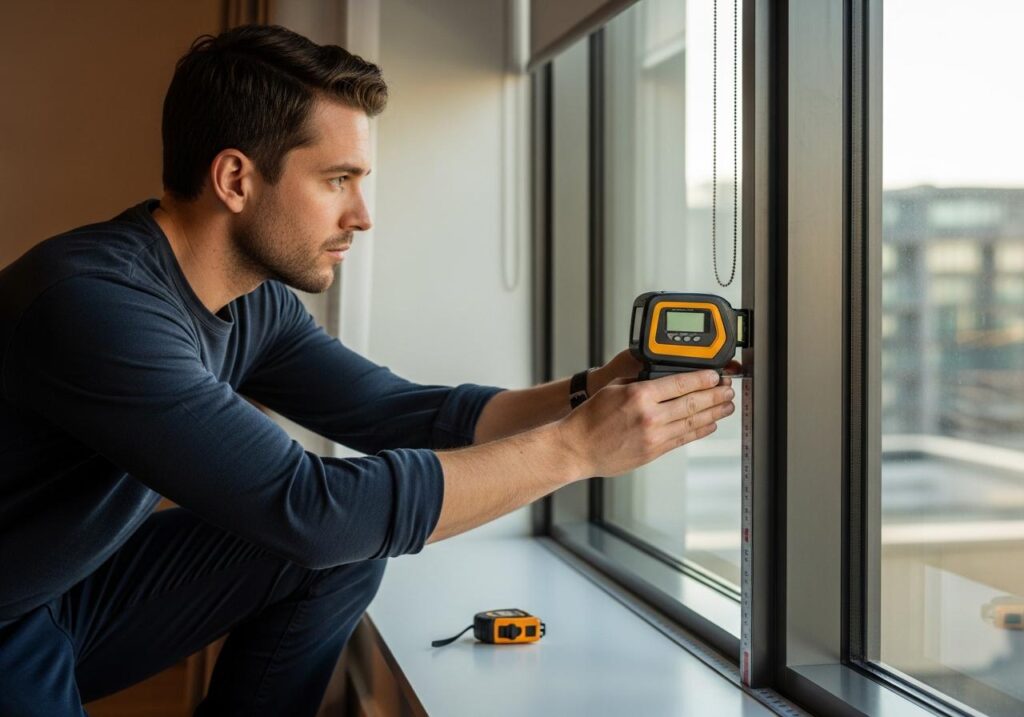
Precision Measurement: How Do You Ensure a Perfect Fit for Window Blinds?
An “almost right” measurement results in a 100% wrong blind. Even a few millimeters can turn a sleek custom treatment into an unprofessional, ill-fitting mess that leaks unwanted light.
Success isn’t about being a DIY expert; it’s about following a precise process. This guide covers the exact steps professional installers use to ensure you get a flawless fit every time.
Why Precision is Non-Negotiable for Window Blinds
Precision measurement ensures your blinds look great, function correctly, and manage the intense South African sun for better energy efficiency. When measurements are off, you risk:
- Unwanted Light Gaps: Narrow blinds leave side gaps that defeat the purpose of blockout fabrics.
- Operational Failure: Overly wide blinds can scrape, jam, or damage the window frame.
- Poor Aesthetics: Ill-fitting blinds look unprofessional and cheapen the room’s appearance.
- Wasted Money: Custom blinds are typically non-refundable, making measurement errors a direct financial loss.
The First Big Decision: Recess Fit or Face-Fix Mount?
Deciding on a mounting style is the essential first step, as it dictates your measuring process and how the blind functions.
- Recess Fit (Inside Mount): Provides a clean, minimalist look within the frame but requires sufficient depth and may have small side light gaps.
- Face-Fix Mount (Outside Mount): Installed on the wall to overlap the opening, making it ideal for maximum light blockage and hiding unattractive frames.
- Check for Obstructions: Always look for handles, vents, or burglar bars that could interfere with the blind’s movement.
- Prioritize Your Needs: Choose Recess for a tidy, “built-in” aesthetic, or Face-Fix for superior privacy and room darkening.
The Step-by-Step Guide to Measuring for a Recess Fit
When ordering a recess-fit blind, provide the exact wall-to-wall opening size. Our factory handles all necessary deductions, so do not make any yourself.
- Measure Width in Three Places: Record the top, middle, and bottom widths using a metal tape measure.
- Select the Smallest Width: Use the narrowest measurement to ensure the blind doesn’t catch on the frame.
- Measure the Drop in Three Places: Record the vertical height at the left, center, and right of the opening.
- Select the Smallest Drop: Use the shortest height to ensure the blind fits perfectly within the vertical space.
- Verify Depth and Obstructions: Confirm the recess is deep enough for the hardware and clear of handles or burglar bars.
The Step-by-Step Guide to Measuring for a Face-Fix Mount
For a face-fix mount, you choose the final blind size by adding overlaps to the window opening for privacy and light control.
- Determine Total Width: Add at least 5cm to each side of the opening (10cm total) to minimize light gaps.
- Calculate Final Width: Use the formula: (Width of opening) + (Desired overlap x 2).
- Determine Total Drop: Add 7–10cm to the top for mounting brackets and 10cm to the bottom for proper coverage.
- Calculate Final Drop: Use the formula: (Height of opening) + (Top overlap) + (Bottom overlap).
- Optimize for Blockout: Increase side overlaps to 10cm when using blockout fabrics for maximum darkness.
The Common Mistakes That Lead to Misfit Blinds
Avoid these common measuring mistakes to ensure your installation goes smoothly:
- Using a Cloth Tape Measure: Always use a metal tape measure; fabric or plastic versions can stretch and lead to inaccurate results.
- Only Measuring Once: Windows are rarely perfectly square, so follow the “measure three times, use the smallest” rule for a guaranteed fit.
- Forgetting Obstructions: Always check for window handles, burglar bars, or alarm sensors that could block the blind’s path.
- Making Your Own Deductions: For recess fits, provide the exact opening size. The factory calculates the clearance, so making your own deductions will result in a blind that is too small.
Get Started with Confidence
Ready to transform your space with the perfect fit? Whether you choose to DIY or want the security of an expert, we are here to help you achieve a flawless finish.
Browse our extensive range of custom blinds today or book a professional measuring service to guarantee a perfect result for your home.
FAQs
Do I make the size deductions for a recess blind myself?
No. Always provide the exact, wall-to-wall opening size for a recess fit. The factory will make the necessary, precise deductions to ensure the blind operates perfectly within that space.
How much should a face-fix blind overlap the window?
A good starting point is 5-7cm on each side for the width. For the height, add at least 7cm above the opening for the brackets and allow the blind to drop 5-10cm below the sill for the best coverage. For blockout blinds, more overlap is always better.
What if my window isn’t perfectly square?
This is very common. It is precisely why you should measure the width and height in three different places and use the smallest measurement for recess-fit blinds. This ensures the blind will fit into the tightest point of the opening. For a face-fix, the overlap will hide the fact that the window is not square.
Can I use the measurements from my old blinds?
No, never do this. Always re-measure the window opening itself. Different blinds have different headrail systems and fitting requirements. The size of your old blind is not a reliable guide for a new one.
What is the minimum window depth required for a recess fit?
This depends entirely on the type of blind. A slim roller blind may only need 60mm of depth. A 50mm Wooden or Faux Wood Venetian blind often requires 75mm or more. It is best to check the specific product requirements or consult an expert if you are unsure.