Style & Function: Exploring the Different Types of Blinds for Your Home
Choosing the right window covering transforms your room’s atmosphere, privacy, and energy efficiency. However, the sheer variety of styles and materials can often feel overwhelming.
The secret is matching the right blind to your room’s specific function. This guide provides a clear framework to help you select the perfect, stylish fit for your home.
Before You Choose: Key Factors to Consider
Selecting the right window covering starts with matching the blind to the specific needs of your space. To simplify your decision, consider these three core factors:
- Functionality: Determine if your primary goal is light control (filtering vs. blockout), privacy from neighbors, or thermal insulation to manage heat.
- Room Environment: Tailor materials to the setting; use moisture-resistant PVC for bathrooms and kitchens, or glare-reducing fabrics for home offices.
- Aesthetics: Ensure the style complements your decor, acting as a cohesive finishing touch whether your look is minimalist and modern or soft and traditional.
A Deep Dive into the Different Types of Blinds
Now, let’s break down the most popular blind types available in South Africa, looking at what makes each one unique and where it performs best.
Roller Blinds: The Sleek & Simple Solution
Roller blinds feature a minimalist design where a single piece of fabric wraps around a discreet casing. Highly versatile, they come in a vast range of options, from sheer light-filtering to total blockout fabrics.
- Pros: Clean, uncluttered aesthetic; easy to operate; space-efficient and budget-friendly.
- Cons: Limited light-tilting functionality; they are generally either fully open or closed.
- Best For: Bedrooms (with blockout fabric), living areas, and modern offices seeking a simple, contemporary look.
Vertical Blinds: Masters of Large Windows & Sliding Doors
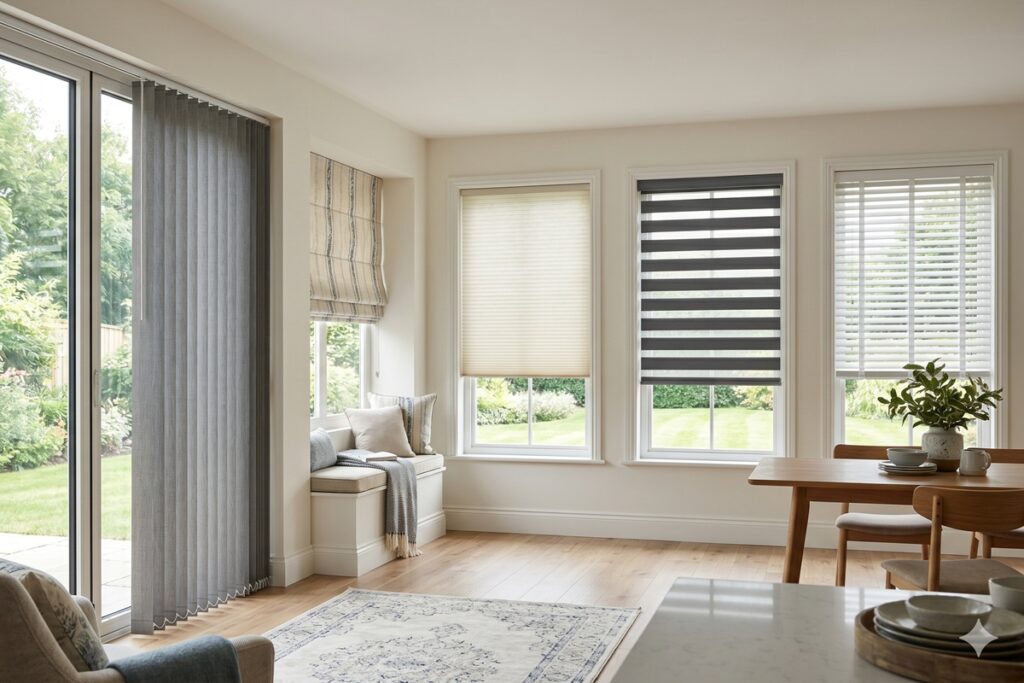
Vertical blinds use individual slats suspended from a top track that can be drawn sideways or tilted. This design offers nuanced control over light and privacy, making them the standard choice for expansive glass surfaces.
- Pros: Exceptional light management; ideal for very wide or tall windows; available in diverse fabric and PVC options.
- Cons: Can appear dated depending on material choice; slats may rattle in breezy conditions.
- Best For: Sliding patio doors, floor-to-ceiling windows, and large office spaces.
Venetian Blinds: The Timeless Classic
Venetian blinds feature adjustable horizontal slats that offer a structured look and precise control over light and privacy. The material you choose defines where they work best:
- Aluminium: Lightweight, budget-friendly, and moisture-resistant.
- Real Wood: Adds warmth, luxury, and natural texture to living areas.
- Faux Wood (PVC): Provides a timber look with total waterproof durability for kitchens and bathrooms.
- Pros: Exceptional light management and a timeless aesthetic across various materials.
- Cons: Individual slats can be more time-consuming to clean than flat fabric blinds.
- Best For: Offices, bathrooms (faux wood), and rooms requiring versatile light tilting.
Roman Blinds (Shades): Soft Fabric Elegance
Roman blinds, or shades, consist of a single fabric panel that gathers into neat, horizontal folds when raised. They blend the decorative softness of curtains with the streamlined functionality of a blind for a sophisticated, plush look.
- Pros: Elegant and luxurious aesthetic; available in extensive fabric patterns; provides natural insulation when closed.
- Cons: Fabric is prone to moisture damage in humid rooms; the stacked folds obscure the top of the window even when fully open.
- Best For: Dining rooms, lounges, and bedrooms where you want to add warmth and a decorative touch.
Zebra (Day-Night) Blinds: The Modern Innovator
Zebra blinds utilize a looped fabric with alternating sheer and solid stripes. By shifting the alignment of these layers, you can easily transition between filtered light, privacy, or an open view.
- Pros: Combines dual functionality in one system; offers a unique, contemporary look with highly flexible light control.
- Cons: The mechanism is more complex than a standard roller blind and may require more care.
- Best For: Living rooms, modern offices, and spaces where you want versatile lighting without sacrificing a sleek aesthetic.
Honeycomb (Cellular) Blinds: The Energy-Saving Champion
Named for their unique cell structure, these blinds trap air to create an insulating barrier. They are the most effective choice for maintaining comfortable indoor temperatures throughout the varying South African seasons.
- Pros: Top-tier insulation that reduces energy costs; lightweight design; provides soft, filtered natural light.
- Cons: The hollow cells can accumulate dust or small insects over time.
- Best For: Bedrooms and living areas, particularly windows exposed to harsh direct sun or cold drafts.
Allusion Blinds: The Best of Both Worlds
Allusion blinds are a striking hybrid that blends the versatility of vertical slats with the soft, flowing appearance of curtains. Made from individual sheer and opaque fabric louvres, they allow you to walk through the blind even when it is drawn.
- Pros: Unique blind-curtain fusion; allows effortless walkthrough access; provides subtle light filtering and privacy.
- Cons: Considered a premium product with a higher price point than standard options.
- Best For: Patio doors, bi-fold doors, and large room dividers where you want a soft, functional feature.
Why Professional Measurement & Installation Matters
While off-the-shelf blinds are available, a custom solution ensures a perfect result. Incorrect measurements are the leading cause of poorly fitting blinds that look unprofessional and fail to function correctly.
At Blinds & Curtain Lane, our experts provide precise measurements and flawless installation. This guarantees your blinds look fantastic, operate smoothly, and provide lasting functional benefits.
FAQs
What are the most popular blinds in South Africa?
Roller blinds and Venetian blinds remain exceptionally popular due to their versatility, wide range of colours, and affordability. However, there is a growing trend towards more innovative solutions like Zebra (Day-Night) blinds for their modern look and dual functionality.
How do I clean different types of blinds?
For hard blinds like Venetian or Vertical blinds, a duster or a damp cloth for each slat works best. For fabric blinds like Roller or Roman blinds, regular light dusting or using the upholstery attachment on your vacuum cleaner is recommended. Always check the manufacturer’s care instructions first.
Are blockout blinds completely dark?
A high-quality blockout fabric will stop virtually all light from passing through the material itself. However, you may still experience some light leakage around the edges of the blind. For a near-total dark room, a custom-fitted blind inside the window frame provides the best result.
Which blinds are best for bathrooms?
The best blinds for bathrooms are those made from moisture-resistant materials. Faux wood (PVC) Venetian blinds and PVC Vertical blinds are excellent choices as they will not warp, peel, or rust in a high-humidity environment.
Can blinds help reduce my electricity bill?
Yes, absolutely. Insulating blinds, especially honeycomb thermal blinds, are highly effective at preventing heat transfer. In summer, they help keep hot air out, reducing the load on your air conditioner. In winter, they prevent heat from escaping, meaning you use less heating.